
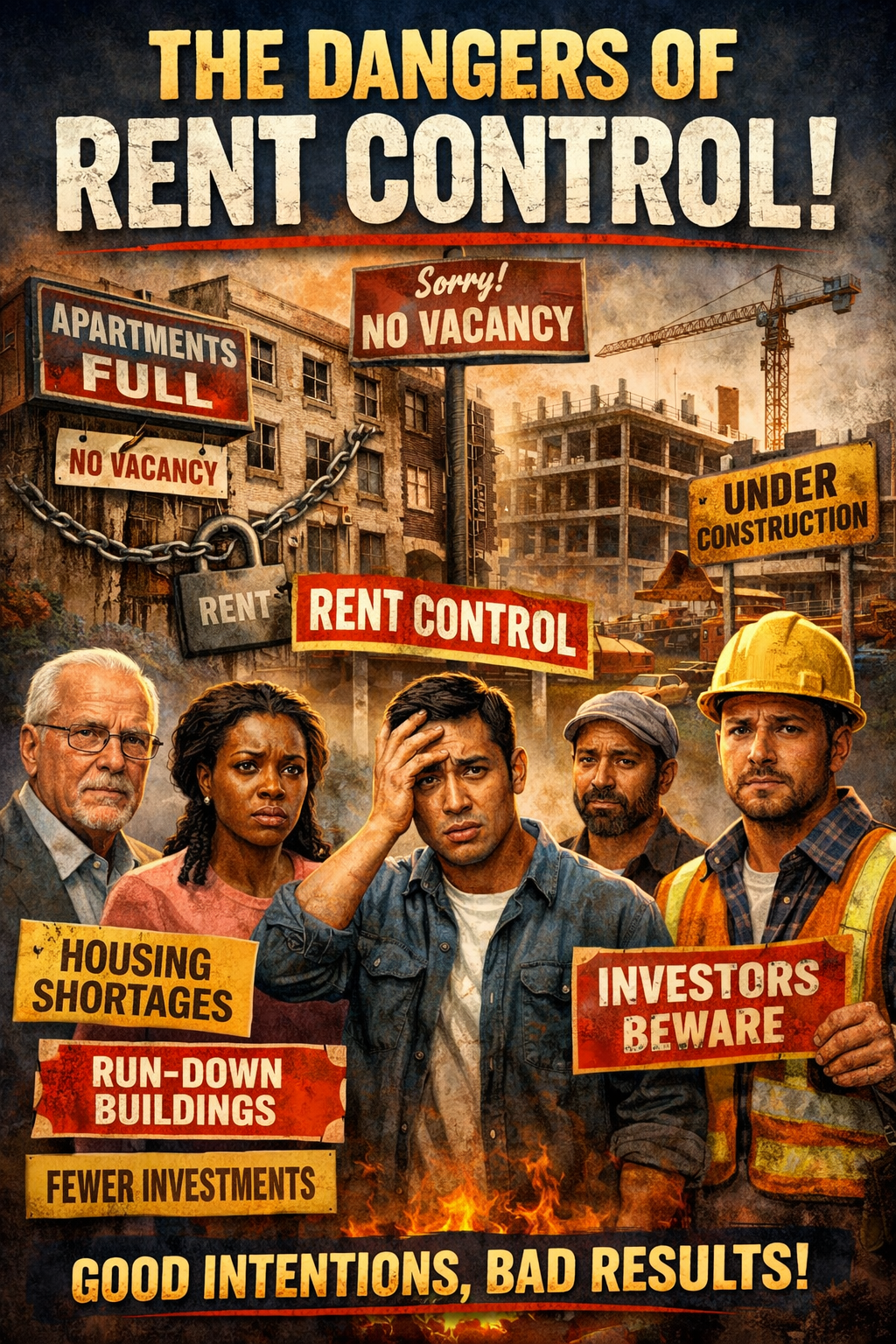
Rent control is one of those ideas that sounds simple on the surface: cap rent increases so tenants can stay in their homes. Stability, predictability, affordability — all goals we can agree on. But when you look beyond the headlines and dig into how rent control actually plays out in real‑world housing markets, a very different picture emerges.
Communities across the country have learned the hard way that rent control often creates more problems than it solves. And as Providence considers its own rent‑control proposal, it’s important for homeowners, tenants, and policymakers to understand the unintended consequences that come with it.
Let’s break it down.
1. Rent Control Shrinks Housing Supply
Every credible study of long‑term rent control shows the same pattern: when strict caps are imposed, the number of available rental units goes down.
Why?
Because when landlords can’t keep up with rising costs — property taxes, insurance, utilities, maintenance — they eventually stop reinvesting in their properties or they sell them altogether. Some convert rentals into condos. Others leave the market entirely.
The result is fewer rental units, not more. And when supply shrinks, rents rise for everyone not protected by the cap — especially new renters and young families trying to enter the market.
2. It Discourages New Construction
Developers have choices. If one city imposes strict rent caps while neighboring communities do not, investment simply moves next door.
That means:
- Fewer new apartments built
- Fewer renovated units
- Fewer modern, energy‑efficient homes
- Less long‑term affordability
Cities like Cambridge, San Francisco, and St. Paul saw construction slow dramatically after adopting rent control. Providence risks the same outcome.
3. It Hurts the Small Landlords Who Provide Most Affordable Housing
Large corporate landlords can absorb losses. Small, local landlords — the ones who own two‑ or three‑family homes and keep neighborhoods stable — cannot.
When their expenses rise faster than the allowed rent increase, they face impossible choices:
- Defer repairs
- Sell the property
- Convert units
- Exit the rental market entirely
These are the very people who provide the majority of naturally affordable housing in Rhode Island. Policies that push them out ultimately hurt the tenants they serve.
4. Rent Control Creates Inequities
One of the least discussed problems with rent control is who actually benefits.
Long‑term tenants in controlled units often receive the biggest advantage — even if they have higher incomes. Meanwhile, new renters face:
- Higher market rents
- Fewer available units
- Longer waitlists
- More competition
This creates a two‑tiered system where some renters are protected and others are priced out.
5. Bureaucracy Grows — But Housing Doesn’t
Rent control requires oversight: boards, hearings, petitions, appeals, enforcement. Cities often underestimate the administrative burden.
A five‑member Rent Board reviewing thousands of petitions is a recipe for delays, inconsistency, and frustration for both tenants and landlords.
More bureaucracy doesn’t build more housing.
So What Does Work?
Communities that have successfully improved affordability focus on increasing supply, not restricting it. Proven strategies include:
- Incentivizing new construction
- Supporting small landlords
- Streamlining permitting
- Expanding housing vouchers
- Encouraging renovation of older units
These approaches create long‑term stability without shrinking the housing market.
Final Thoughts
Rent control is often proposed with good intentions, but intentions don’t build homes. Supply does. Stability does. Policies that encourage investment, protect small landlords, and expand housing options do.
As Providence debates its next steps, it’s essential to look at the full picture — not just the promise of short‑term relief, but the long‑term impact on the people who live and work here.
If you have questions about how rent control could affect your property, your neighborhood, or your investment strategy, I’m always here to help you navigate the market with clarity and confidence.
— Joe Luca Your trusted REALTOR®, educator, and advocate for smart housing policy



 CupOfJoeLuca