Cooling But Sticky Inflation

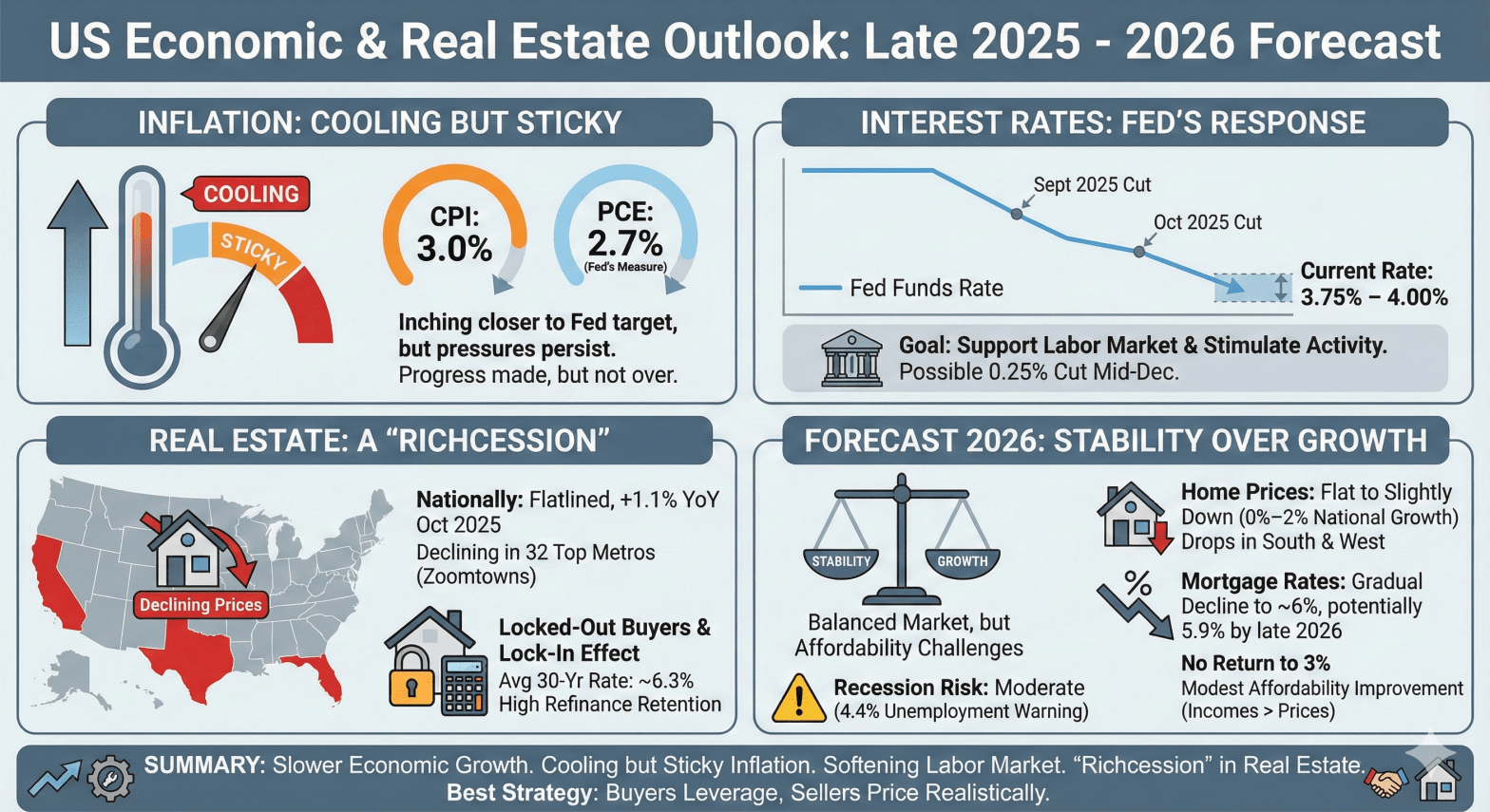
Inflation has been a hot topic throughout 2025, and recent data indicates that it is inching closer to the Federal Reserve’s target. As of September 2025, the Consumer Price Index (CPI) sits at 3.0%, showing signs of cooling. However, inflation remains sticky, with the Personal Consumption Expenditures (PCE) index, the Fed’s preferred measure, hovering around 2.7%. While these figures suggest progress, the persistence of inflationary pressures means that the Fed’s job is far from over.

Interest Rates: Fed’s Response to a Softening Labor Market

In response to the softening labor market, the Federal Reserve has shifted its stance on interest rates. After cutting rates in September and October 2025, the current rate stands at 3.75%–4.00%. The Fed’s goal is to support the labor market and stimulate economic activity. Another 0.25% cut is possible in mid-December, though not guaranteed. This proactive approach by the Fed aims to mitigate the impact of rising unemployment and ensure economic stability.

Home Prices and Sales: A “Richcession” in Real Estate

The real estate market is experiencing its own set of challenges. Nationally, home price growth has nearly flatlined, slowing to just 1.1% year-over-year in October 2025. We are witnessing a “richcession” in real estate, with prices actively declining in 32 of the top 100 metros, particularly in “Zoomtowns” and pandemic boom markets like Florida, Texas, and California. Sales activity remains sluggish, as high costs have locked out first-time buyers, and the “lock-in effect” keeps some inventory off the market. Current 30-year fixed mortgage rates are averaging in the high-6% range, approximately 6.3%. Despite these high rates, refinance retention has hit a multi-year high as homeowners desperately seek to lower monthly payments where possible.

Forecast: What to Expect in 2026

Looking ahead to 2026, the consensus is “Stability, over Growth.” We are moving toward a balanced market, but affordability will remain a primary challenge. The recession risk is moderate, with the “soft landing” being the baseline scenario. However, the rising unemployment rate (4.4%) is a warning sign. If job losses accelerate, a mild recession could occur. Home prices are expected to remain flat to slightly down, with national prices growing 0%–2%. However, price drops are anticipated in the South and West as inventory floods those markets. Mortgage rates are expected to gradually decline, averaging near 6% and potentially dipping to 5.9% by late 2026. A return to 3% rates is unlikely. With incomes rising faster than home prices, affordability will improve slightly for the first time in years.

Best Strategy for Buyers and Sellers

For buyers, now is the time to leverage your negotiating power, which is stronger than at any point since 2019. For sellers, pricing realistically is critical, as bidding wars are largely a thing of the past. Navigating the real estate market in 2026 will require a strategic approach, but with the right information and preparation, both buyers and sellers can achieve their goals.

In conclusion, while the economy is growing, it is doing so at a slower pace. Inflation is cooling but remains sticky, and the labor market is softening. The Federal Reserve is taking steps to support the economy, and the real estate market is experiencing a “richcession.” As we look ahead to 2026, stability is the key theme, with moderate recession risk and gradual improvements in affordability. By staying informed and strategic, you can navigate these economic changes successfully.

The above image was created with ai based on data in this post.

Home Ownership – A Great Hedge Against The Impact Of Rising Inflation

If you’re following along with the news today, you’ve heard about rising inflation. Today, inflation is at a 40-year high. According to the National Association of Home Builders (NAHB):

“Consumer prices accelerated again in May as shelter, energy and food prices continued to surge at the fastest pace in decades. This marked the third straight month for inflation above an 8% rate and was the largest year-over-year gain since December 1981.”

With inflation rising, you’re likely feeling it impact your day-to-day life as prices go up for gas, groceries, and more. These climbing consumer costs can put a pinch on your wallet and make you re-evaluate any big purchases you have planned to ensure they’re still worthwhile.

If you’ve been thinking about purchasing a home this year, you’re probably wondering if you should continue down that path or if it makes more sense to wait. While the answer depends on your situation, here’s how homeownership can help you combat the rising costs that come with inflation.

Homeownership Helps You Stabilize One of Your Biggest Monthly Expenses

Investopedia explains that during a period of high inflation, prices rise across the board. That’s true for things like food, entertainment, and other goods and services, even housing. Both rental prices and home prices are on the rise. So, as a buyer, how can you protect yourself from increasing costs? The answer lies in homeownership.

Buying a home allows you to stabilize what’s typically your biggest monthly expense: your housing cost. When you have a fixed-rate mortgage on your home, you lock in your monthly payment for the duration of your loan, often 15 to 30 years. James Royal, Senior Wealth Management Reporter at Bankratesays:

A fixed-rate mortgage allows you to maintain the biggest portion of housing expenses at the same payment. Sure, property taxes will rise and other expenses may creep up, but your monthly housing payment remains the same. That’s certainly not the case if you’re renting.”

So even if other prices increase, your housing payment will be a reliable amount that can help keep your budget in check. If you rent, you don’t have that same benefit, and you won’t be protected from rising housing costs.

Investing in an Asset That Historically Outperforms Inflation

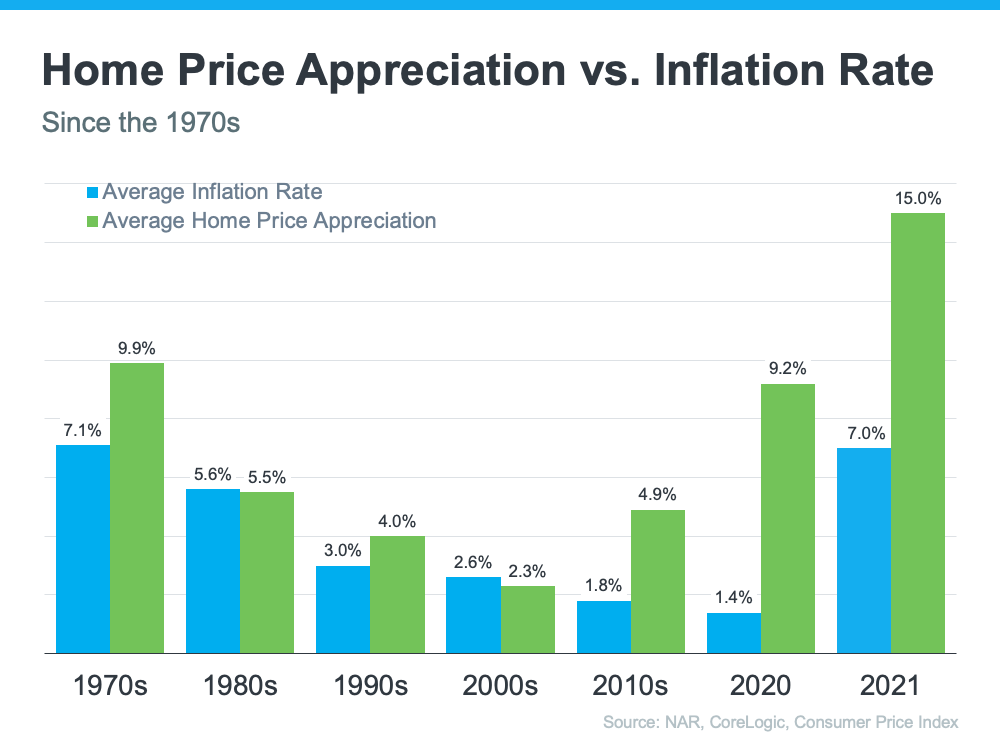
While it’s true rising home prices and higher mortgage rates mean that buying a house today costs more than it did even a few months ago, you still have an opportunity to set yourself up for a long-term win. That’s because, in inflationary times, you want to be invested in an asset that outperforms inflation and typically holds or grows in value.

The graph below shows how the average home price appreciation outperformed the average inflation rate in most decades going all the way back to the seventies – making homeownership a historically strong hedge against inflation (see graph below):

Homeownership Is a Great Hedge Against the Impact of Rising Inflation | MyKCM

So, what does that mean for you? Today, experts forecast home prices will only go up from here thanks to the ongoing imbalance of supply and demand. Once you buy a house, any home price appreciation that does occur will grow your equity and your net worth. And since homes are typically assets that grow in value, you have peace of mind that history shows your investment is a strong one.

That means, if you’re ready and able, it makes sense to buy today before prices rise further.

Bottom Line

If you’ve been thinking about buying a home this year, it makes sense to act soon, even with inflation rising. That way you can stabilize your monthly housing cost and invest in an asset that historically outperforms inflation. If you’re ready to get started, let’s connect so you have expert advice on your specific situation when you’re ready to buy a home.

« Things To Avoid After Applying for a Home Loan

The information contained, and the opinions expressed, in this article are not intended to be construed as investment advice. Keeping Current Matters, Inc. does not guarantee or warrant the accuracy or completeness of the information or opinions contained herein. Nothing herein should be construed as investment advice. You should always conduct your own research and due diligence and obtain professional advice before making any investment decision. Keeping Current Matters, Inc. will not be liable for any loss or damage caused by your reliance on the information or opinions contained herein.Search

Categories

We believe every family should feel confident when buying and selling a home.