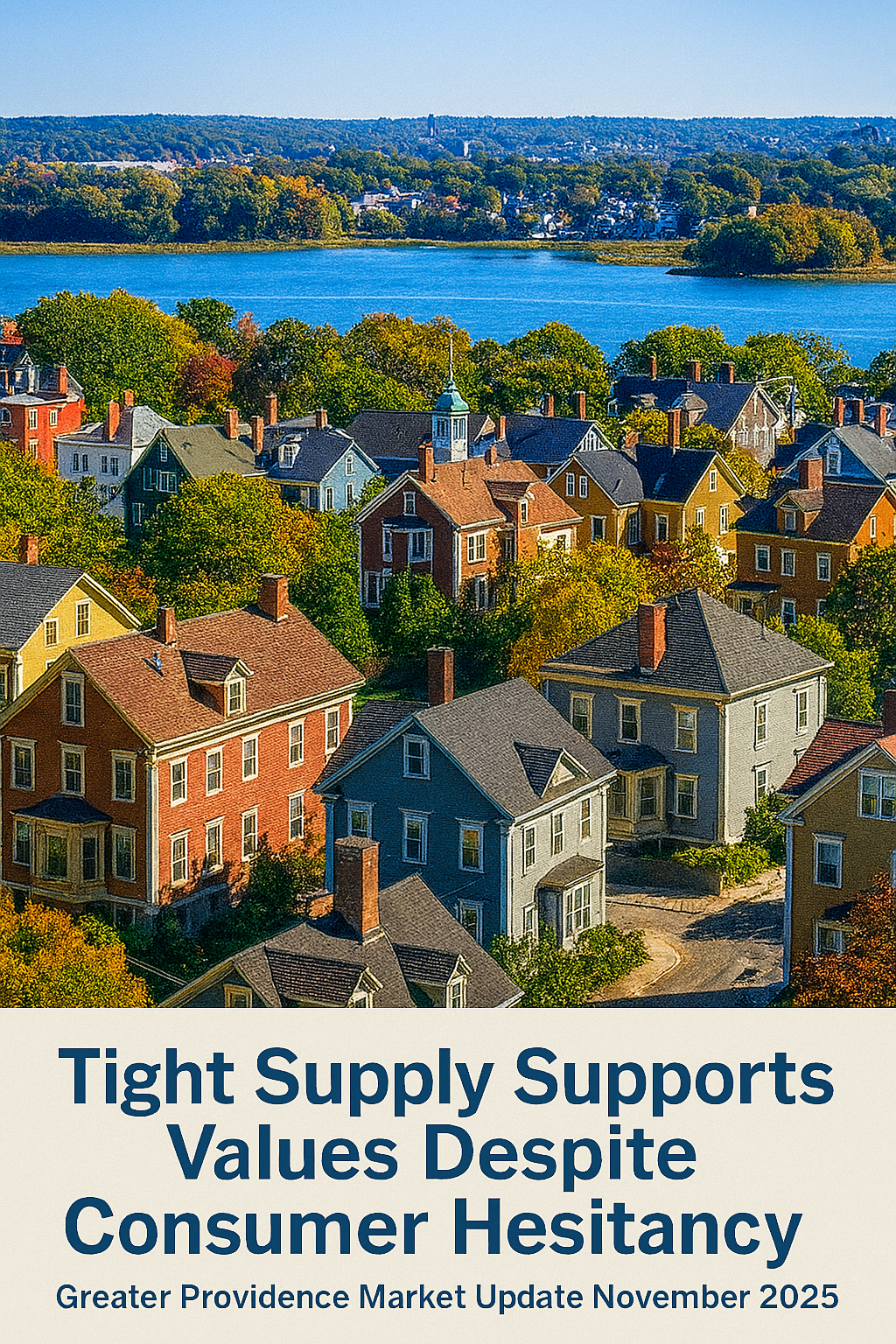
Providence Housing Market: A Resilient Outlook Amid National Trends

For months, we’ve all been hearing about how the housing market is “stuck”—high mortgage rates, affordability challenges, and cautious consumers. Home Depot’s most recent analyst call echoed those themes, pointing to weak housing turnover, consumer uncertainty, and the absence of storm-driven demand as drags on their sales.

But here’s the thing: while those national headwinds are real, Greater Providence continues to show resilience. Let’s break it down.

📉 National Trends That Hit Home

  • Housing Turnover Slows: Across the country, fewer people are buying and selling homes. That means less remodeling, less furnishing, and fewer big-ticket projects.
  • Consumer Caution: Shoppers are deferring discretionary spending. Kitchens, bathrooms, and flooring projects are being put on hold until confidence returns.
  • Storm Activity: Believe it or not, storm seasons drive demand for repairs and rebuilding. A mild season means less of that emergency-driven activity.

📊 Greater Providence Snapshot

  • Inventory: Just 227 homes for sale in late October, with only 86 new listings. Supply is tight.
  • Speed: Homes go pending in about 15 days. Buyers must move fast.
  • Prices: Average home value sits at $419,889, up 1.1% year-over-year. Median sale price in October was $515,000, up 3% YoY.
  • Neighborhoods:
    • College Hill: ~$968,317
    • Downtown: ~$548,504
    • Federal Hill: ~$430,068
    • Valley/Smith Hill: ~$369K–$373K

🧭 What It Means for Buyers & Sellers

  • For Buyers: Yes, rates are high. But inventory is scarce, and homes are still moving quickly. Waiting for the “perfect” rate could mean missing out on the right property.
  • For Sellers: Demand remains strong enough to keep values stable. Homes are selling near list price, often with multiple offers. If you’re considering listing, the market is still in your favor.
  • For Investors: Providence remains attractive as a safe-haven asset. Tight supply and steady demand make real estate here a hedge against broader economic uncertainty.

🔮 Outlook

Nationally, the housing market is in a holding pattern—waiting for lower rates or stronger consumer confidence. Locally, Providence’s severe inventory shortage keeps values resilient. Expect modest price growth (~3.5% in 2026), fast-moving listings, and continued competition in desirable neighborhoods.

Bottom Line: The same forces slowing Home Depot’s sales—cautious consumers, weak turnover, affordability pressures—are shaping our housing market. But in Greater Providence, scarcity keeps the market competitive. If you’re thinking about buying, selling, or investing, the window of opportunity is still open.

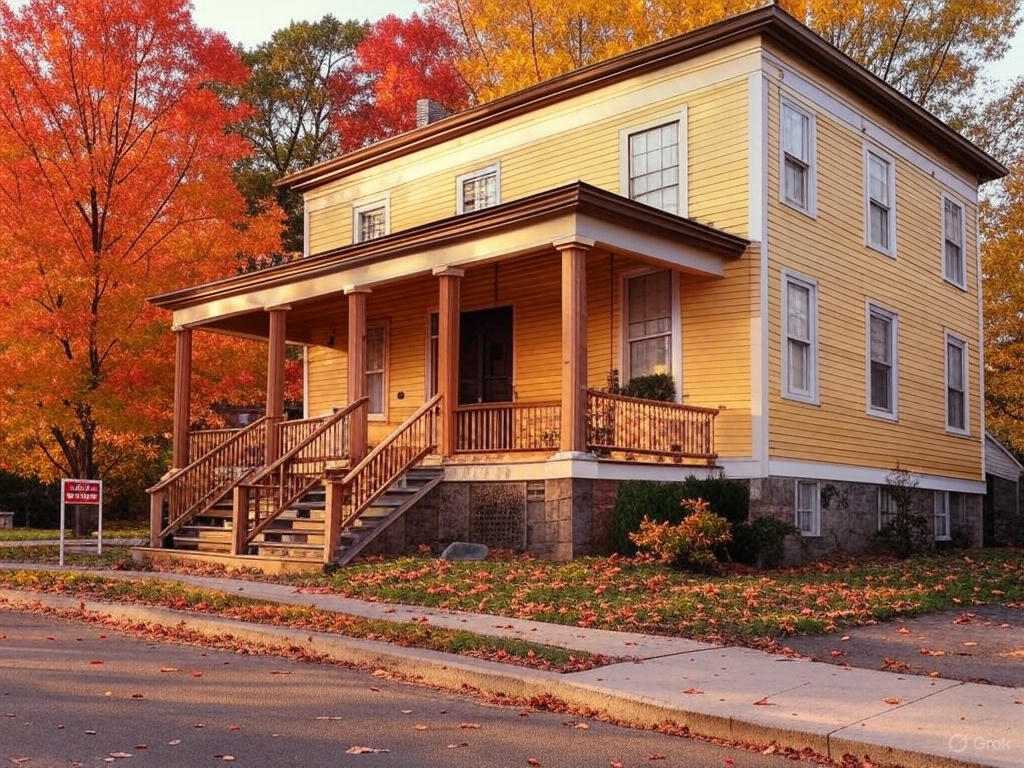
Above image and some data generated by AI.

Why Now Is a Great Time to Buy a House in Southern New England

If you’ve been dreaming of owning a home in Southern New England—think Connecticut’s charming towns, Rhode Island’s coastal gems, or the historic corners of southern Massachusetts—2025 might be your moment. As of March 11, 2025, the real estate market here is showing signs of opportunity for buyers. From economic shifts to local trends, here’s why now could be the perfect time to plant your roots in this picturesque region.

1. Interest Rates Are Settling Down

After a wild ride in recent years, mortgage rates appear to be stabilizing across the U.S., and Southern New England is no exception. While we’re not back to the rock-bottom rates of the 2010s, the steep climbs of the early 2020s have eased. For buyers in places like New Haven or Providence, this means more predictable mortgage payments and a chance to lock in a rate before any surprises. With the Federal Reserve keeping a close eye on inflation, rates could hold steady—giving you a solid window to finance that Cape Cod-style home or colonial fixer-upper.

2. Inventory Is Ticking Up Across the Region

Southern New England has felt the inventory crunch hard, with sellers clinging to their low-rate mortgages or waiting out peak prices. But early 2025 is bringing a shift. In towns like Mystic, CT, or Bristol, RI, more “For Sale” signs are popping up. Maybe it’s empty nesters downsizing, retirees heading south, or homeowners feeling the market has topped out. Whatever the reason, this uptick means more choices—whether you’re eyeing a waterfront cottage in Narragansett or a suburban spread in West Hartford. More options also mean less cutthroat bidding wars, a welcome relief for buyers.

3. Prices Are Softening in Hotspots

The pandemic boom sent prices soaring in Southern New England, especially in desirable spots like Fairfield County or the South Shore of Massachusetts. But as demand normalizes, some of these overheated markets are cooling. Sellers who bought at the 2021 peak might be more open to negotiation, especially in areas where listings are lingering a bit longer. In places like Cranston, RI, or Milford, CT, you could snag a deal that feels more reasonable than it did two years ago. It’s not a buyer’s market everywhere, but the balance is tipping your way in many towns.

4. Southern New England’s Long-Term Appeal Holds Strong

This region’s charm—historic villages, top-notch schools, and proximity to both Boston and New York—makes it a perennial winner for real estate investment. Even with short-term ebbs and flows, home values here tend to climb over time. Buying now in, say, Portsmouth, RI, or Simsbury, CT, sets you up for equity growth as hybrid work trends keep the area attractive to professionals and families alike. A home purchased in 2025 could be your family’s cornerstone—and a financial win—by 2035.

5. Local Incentives Are Sweetening the Deal

From builders in growing suburbs like Plainfield, CT, to sellers in competitive markets like Attleboro, MA, incentives are emerging. New developments might offer rate buydowns or closing cost help, while individual sellers could throw in extras—like covering roof repairs or offering flexible move-in dates—to close the deal. These perks can shave thousands off your upfront costs, making homeownership more attainable in a region where prices can still feel steep.

6. Seasonal Timing Works in Your Favor

March in Southern New England is a quiet season for real estate. The spring rush hasn’t fully kicked in, and winter’s chill keeps some buyers indoors. That means less competition as you tour that farmhouse in Litchfield County or that bungalow in Westerly, RI. Sellers listing now might be extra motivated—perhaps they’re relocating for work or eager to sell before the summer crowd arrives. It’s a strategic moment to strike while the market’s still waking up.

A Word of Caution

Southern New England’s market varies widely—Greenwich, CT, is a different beast from Fall River, MA. Check local trends, get pre-approved, and team up with a realtor who knows the area inside out. Coastal properties might still carry flood insurance costs, and older homes could need TLC. But for those ready to navigate these quirks, the rewards are there.

The Bottom Line

March 2025 is shaping up as a buyer’s sweet spot in Southern New England. With steadier rates, growing inventory, softening prices in key areas, and the region’s enduring appeal, the stars are aligning. So, grab your map, hit the open houses—from Stamford to Stonington—and make your move. That quintessential New England home, complete with a front porch and autumn leaves, might be waiting for you right now.

If you have any questions, or would like to connect, email me: Joe@JoeLucacaRealtor.com

Are Home Prices Going To Come Down?

Today’s headlines and news stories about home prices are confusing and make it tough to know what’s really happening. Some say home prices are heading for a correction, but what do the facts say? Well, it helps to start by looking at what a correction means.

Here’s what Danielle Hale, Chief Economist at Realtor.comsays:

“In stock market terms, a correction is generally referred to as a 10 to 20% drop in prices . . . We don’t have the same established definitions in the housing market.

In the context of today’s housing market, it doesn’t mean home prices are going to fall dramatically. It only means prices, which have been increasing rapidly over the last couple years, are normalizing a bit. In other words, they’re now growing at a slower pace. Prices vary a lot by local market, but rest assured, a big drop off isn’t what’s happening at a national level.

The Real Estate Market Is Normalizing

From 2020 to 2022, home prices skyrocketed. That rapid increase was due to high demand, low interest rates, and a shortage of homes for sale. But, that kind of aggressive growth couldn’t continue forever.

Today, price growth has started to slow down, which is a sign the market is beginning to normalize. The most recent data from Case-Shiller shows that after being basically flat for a couple of months last year, prices are going up at a national level – just not as quickly as before (see graph below):

The big takeaway? So far this year, there’s been a much healthier pace of price growth compared to the pandemic.

Of course, that’s what’s happening now, but you may be wondering what’s next for prices. Marco Santarelli, the Founder of Norada Real Estate Investmentssays:

Expert forecasts lean towards a moderation in home price growth over the next five years. This translates to a slower and more sustainable pace of appreciation compared to the breakneck speed witnessed in recent years, rather than a freefall in prices.”

It’s all about supply and demand. Increasing inventory plus limited buyer demand, due to relatively high mortgage rates, will continue to ease some of the upward pressure on prices.

 What This Means for You

 If you’re thinking about buying a home, slowing price growth is welcome news. Skyrocketing home prices during the pandemic left many would-be homebuyers feeling priced-out. 

While it’s still a good thing to know the value of the home you buy will likely continue to go up once you own it, slowing price gains are making things feel more manageable. Odeta Kushi, Deputy Chief Economist at First Americansays:

“While housing affordability is low for potential first-time home buyers, slowing price appreciation and lower mortgage rates could help — so the dream of homeownership isn’t boarded up just yet.”

Bottom Line

At the national level, home prices are not going down. And most experts forecast they’ll continue growing moderately moving forward. But prices vary a lot by local market. That’s where a trusted real estate agent comes into play. If you have questions about what’s happening with prices in our area, reach out.

Why Fixing Up Your House Can Help It Sell Faster

 If you’re thinking about selling your house, you should know there are buyers who are ready and able to pay today’s high prices. But they want a home that’s move-in ready. A recent press release from Redfin explains:

Buyers are still out there and they’re willing to pay today’s high prices, but only if the house is in really good shape. They don’t want to spend extra money on paint or new appliances.”

It makes sense when you think about it. They’re having to pay a lot of money for a house in today’s market. That means they may not be able to easily afford upgrades after they move in. So, if your home is outdated or needs some work, buyers might pass it by or offer a lower price than you were hoping for.

And there are a lot of homes that need upgrades right now. Millions are entering their prime remodel years, meaning they’re between 20 and 39 years old. Maybe yours is one of them. According to John Burns Research and Consulting (JBRC), the number of homes in their prime remodel years is high and growing (see graph below):

If your house falls into this category, it’s important to consider making selective updates to help it appeal to buyers, so it sells faster. But how do you know where to spend your time and money?

Why You Need a Real Estate Agent

By working with a local real estate agent to be strategic about the improvements you make, you can be sure you’re making a smart investment. Put simply, not all upgrades are worth the cost. As Bankrate says:

Before you spend money on costly upgrades, be sure the changes you make will have a high return on investment. It doesn’t make sense to install new granite countertops, for example, if you only stand to break even on them, or even lose money.”

 And, as that same Bankrate article goes on to say, that’s where a local real estate agent comes in:

“. . . a good real estate agent will know what local buyers expect and can help you decide what needs doing and what doesn’t.”

Your agent will know what buyers in your area are looking for and what they’re willing to pay for it. By working together, you can avoid spending money on upgrades that won’t pay off. Instead, they’ll fill you in on which changes will make your house more appealing and valuable.

Bottom Line

Selling a house right now requires more than just putting up a For Sale sign. You need to make sure it’s in good condition to attract buyers who are willing to pay today’s high prices.

The way to do that is by making smart improvements that will give you the best return on your investment. Let’s work together so you know what buyers are looking for and what your house needs before selling. 

Saving for a Down Payment? Here’s What You Need To Know.

If you’re planning to buy your first home, then you’re probably focused on saving for all the costs involved in such a big purchase. One of the expenses that may be at the top of your mind is your down payment. If you’re intimidated by how much you need to save for that, it may be because you believe you must put 20% down. That doesn’t necessarily have to be the case. As the National Association of Realtors (NAR) notes:

One of the biggest misconceptions among housing consumers is what the typical down payment is and what amount is needed to enter homeownership.”

And a recent Freddie Mac survey finds:

. . . nearly a third of prospective homebuyers think they need a down payment of 20% or more to buy a home. This myth remains one of the largest perceived barriers to achieving homeownership.”

Here’s the good news. Unless specified by your loan type or lender, it’s typically not required to put 20% down. This means you could be closer to your homebuying dream than you realize.

According to NAR, the median down payment hasn’t been over 20% since 2005. In fact, the median down payment for all homebuyers today is only 14%. And it’s even lower for first-time homebuyers at just 6% (see graph below):

What does this mean for you? It means you may not need to save as much as you originally thought.

Learn About Options That Can Help You Toward Your Goal

And it’s not just how much you need for your down payment that isn’t clear. There are also misconceptions about down payment assistance programs. For starters, many people believe there’s only assistance available for first-time homebuyers. While first-time buyers have many options to explore, repeat buyers have some, too.

According to Down Payment Resource,there are over 2,000 homebuyer assistance programs in the U.S., and the majority are intended to help with down payments. That same resource goes on to say:

You don’t have to be a first-time buyer. Over 38% of all programs are for repeat homebuyers who have owned a home in the last 3 years.

Plus, there are even loan types, like FHA loans with down payments as low as 3.5% as well as options like VA loans and USDA loans with no down payment requirements for qualified applicants.

If you’re interested in learning more about down payment assistance programs, information is available through sites like Down Payment Resource. Then, partner with a trusted lender to learn what you qualify for on your homebuying journey.

Bottom Line

Remember, a 20% down payment isn’t always required. If you want to purchase a home this year, let’s connect to start the conversation about your homebuying goals.

Are Home Prices Going Up or Down? That Depends…

Media coverage about what’s happening with home prices can be confusing. A large part of that is due to the type of data being used and what they’re choosing to draw attention to. For home prices, there are two different methods used to compare home prices over different time periods: year-over-year (Y-O-Y) and month-over-month (M-O-M). Here’s an explanation of each. 

Year-over-Year (Y-O-Y):
  • This comparison measures the change in home prices from the same month or quarter in the previous year. For example, if you’re comparing Y-O-Y home prices for April 2023, you would compare them to the home prices for April 2022.
  • Y-O-Y comparisons focus on changes over a one-year period, providing a more comprehensive view of long-term trends. They are usually useful for evaluating annual growth rates and determining if the market is generally appreciating or depreciating.
Month-over-Month (M-O-M):
  • This comparison measures the change in home prices from one month to the next. For instance, if you’re comparing M-O-M home prices for April 2023, you would compare them to the home prices for March 2023.
  • Meanwhile, M-O-M comparisons analyze changes within a single month, giving a more immediate snapshot of short-term movements and price fluctuations. They are often used to track immediate shifts in demand and supply, seasonal trends, or the impact of specific events on the housing market.

The key difference between Y-O-Y and M-O-M comparisons lies in the time frame being assessed. Both approaches have their own merits and serve different purposes depending on the specific analysis required.

Why Is This Distinction So Important Right Now? 

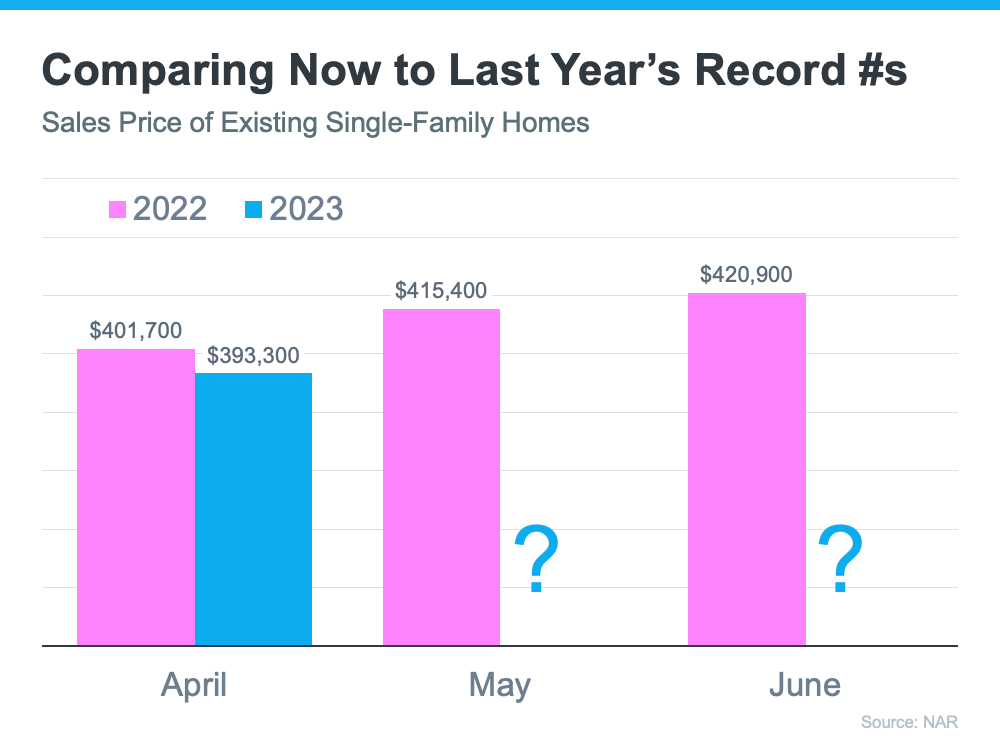
We’re about to enter a few months when home prices could possibly be lower than they were the same month last year. April, May, and June of 2022 were three of the best months for home prices in the history of the American housing market. Those same months this year might not measure up. That means, the Y-O-Y comparison will probably show values are depreciating. The numbers for April seem to suggest that’s what we’ll see in the months ahead (see graph below):

That’ll generate troubling headlines that say home values are falling. That’ll be accurate on a Y-O-Y basis. And, those headlines will lead many consumers to believe that home values are currently cascading downward.

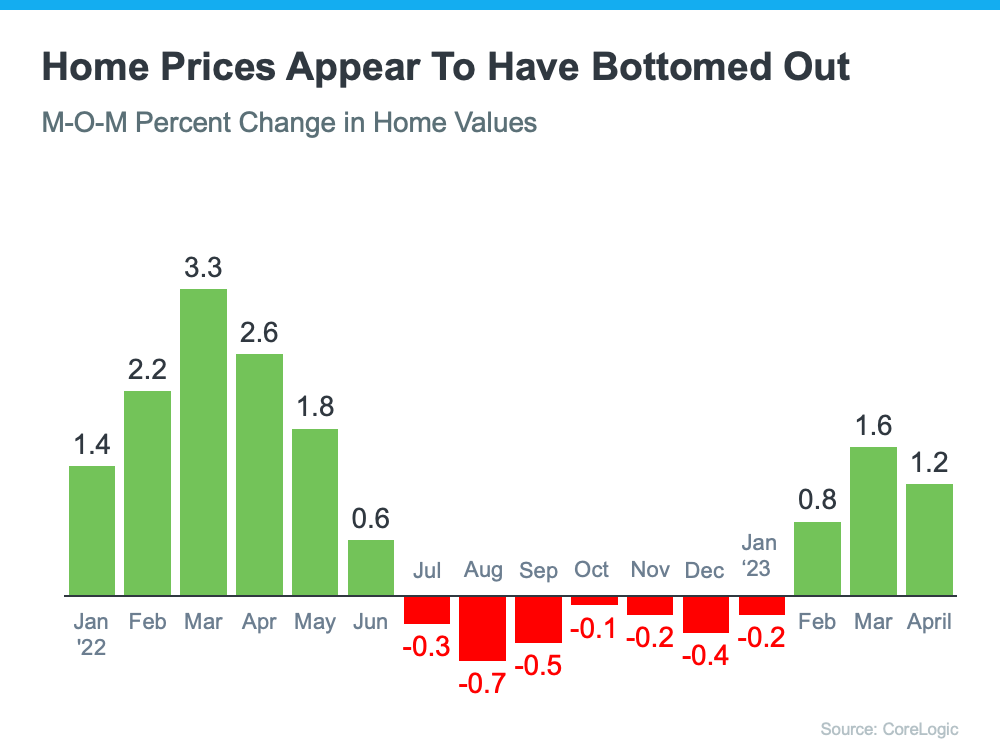
However, on a closer look at M-O-M home prices, we can see prices have actually been appreciating for the last several months. Those M-O-M numbers more accurately reflect what’s truly happening with home values: after several months of depreciation, it appears we’ve hit bottom and are bouncing back.

Here’s an example of M-O-M home price movements for the last 16 months from the CoreLogic Home Price Insights report (see graph below):

Why Does This Matter to You?

So, if you’re hearing negative headlines about home prices, remember they may not be painting the full picture. For the next few months, we’ll be comparing prices to last year’s record peak, and that may make the Y-O-Y comparison feel more negative. But, if we look at the more immediate, M-O-M trends, we can see home prices are actually on the way back up.

There’s an advantage to buying a home now. You’ll buy at a discount from last year’s price and before prices start to pick up even more momentum. It’s called “buying at the bottom,” and that’s a good thing.

Bottom Line

If you have questions about what’s happening with home prices, or if you’re ready to buy before prices climb higher, let’s connect.

Why Today’s Housing Market Is Not About To Crash

There’s been some concern lately that the housing market is headed for a crash. And given some of the affordability challenges in the housing market, along with a lot of recession talk in the media, it’s easy enough to understand why that worry has come up.

But the data clearly shows today’s market is very different than it was before the housing crash in 2008. Rest assured, this isn’t a repeat of what happened back then. Here’s why.

It’s Harder To Get a Loan Now

It was much easier to get a home loan during the lead-up to the 2008 housing crisis than it is today. Back then, banks had different lending standards, making it easy for just about anyone to qualify for a home loan or refinance an existing one. As a result, lending institutions took on much greater risk in both the person and the mortgage products offered. That led to mass defaults, foreclosures, and falling prices.

Things are different today as purchasers face increasingly higher standards from mortgage companies. The graph below uses data from the Mortgage Bankers Association (MBA) to show this difference. The lower the number, the harder it is to get a mortgage. The higher the number, the easier it is.

Unemployment Recovered Faster This Time

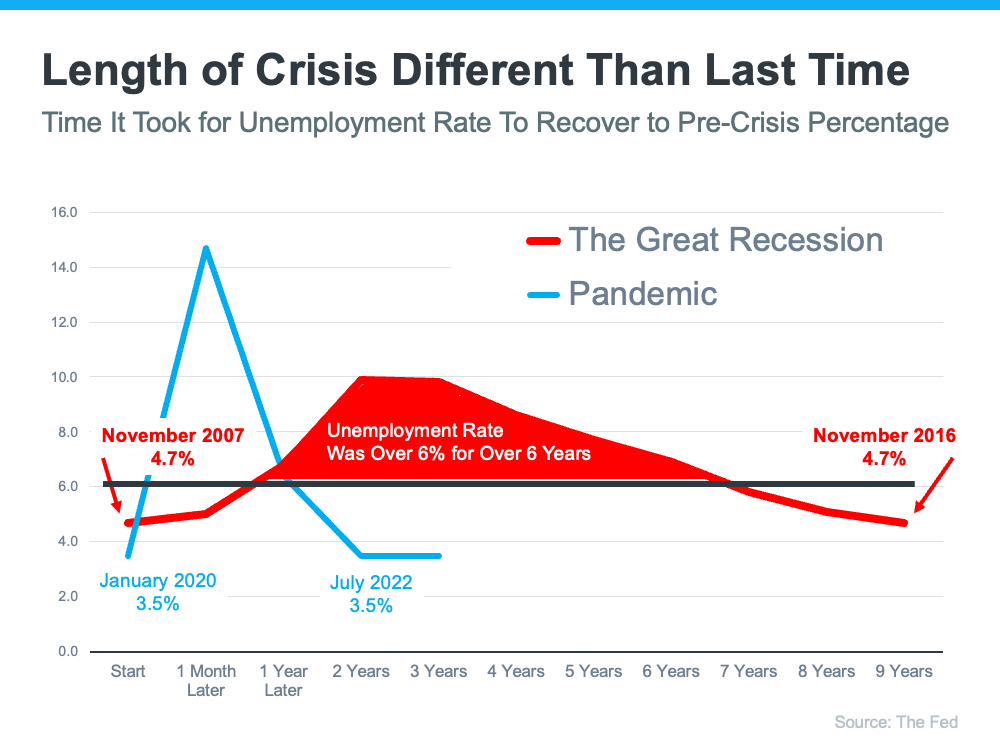
While the pandemic caused unemployment to spike over the last couple of years, the jobless rate has already recovered back to pre-pandemic levels (see the blue line in the graph below). Things were different during the Great Recession as a large number of people stayed unemployed for a much longer period of time (see the red in the graph below):

Here’s how the quick job recovery this time helps the housing market. Because so many people are employed today, there’s less risk of homeowners facing hardship and defaulting on their loans. This helps put today’s housing market on stronger footing and reduces the risk of more foreclosures coming onto the market.

There Are Far Fewer Homes for Sale Today

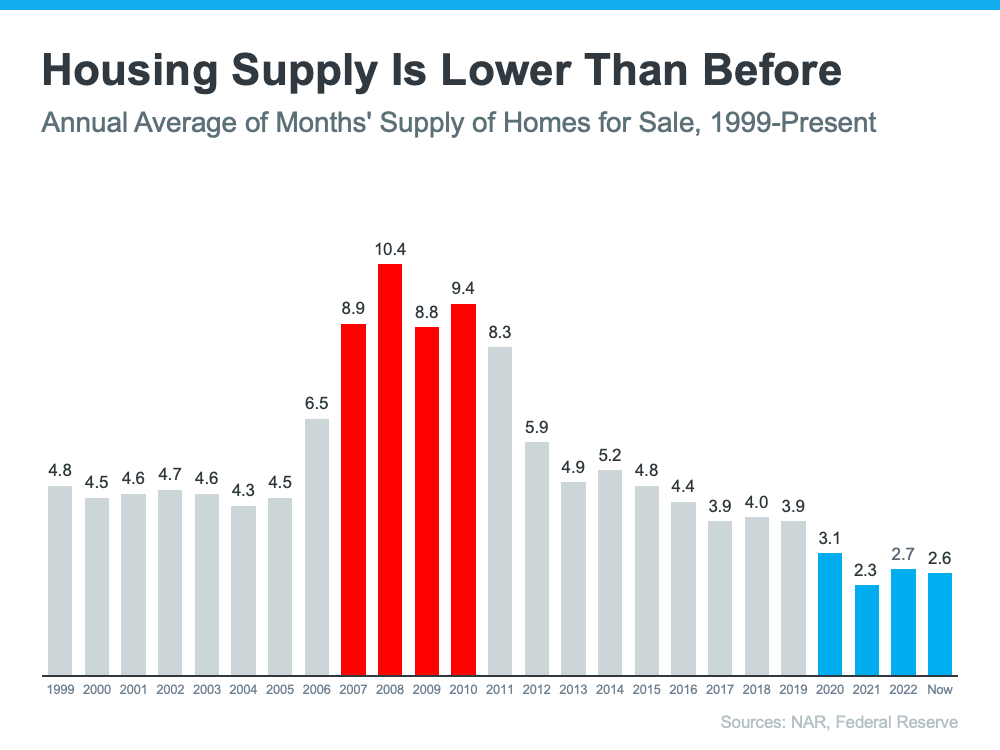
There were also too many homes for sale during the housing crisis (many of which were short sales and foreclosures), and that caused prices to fall dramatically. Today, there’s a shortage of inventory available overall, primarily due to years of underbuilding homes.

The graph below uses data from theNational Association of Realtors (NAR) and the Federal Reserve to show how the months’ supply of homes available now compares to the crash. Today, unsold inventory sits at just a 2.6-months’ supply. There just isn’t enough inventory on the market for home prices to come crashing down like they did in 2008.

Equity Levels Are Near Record Highs

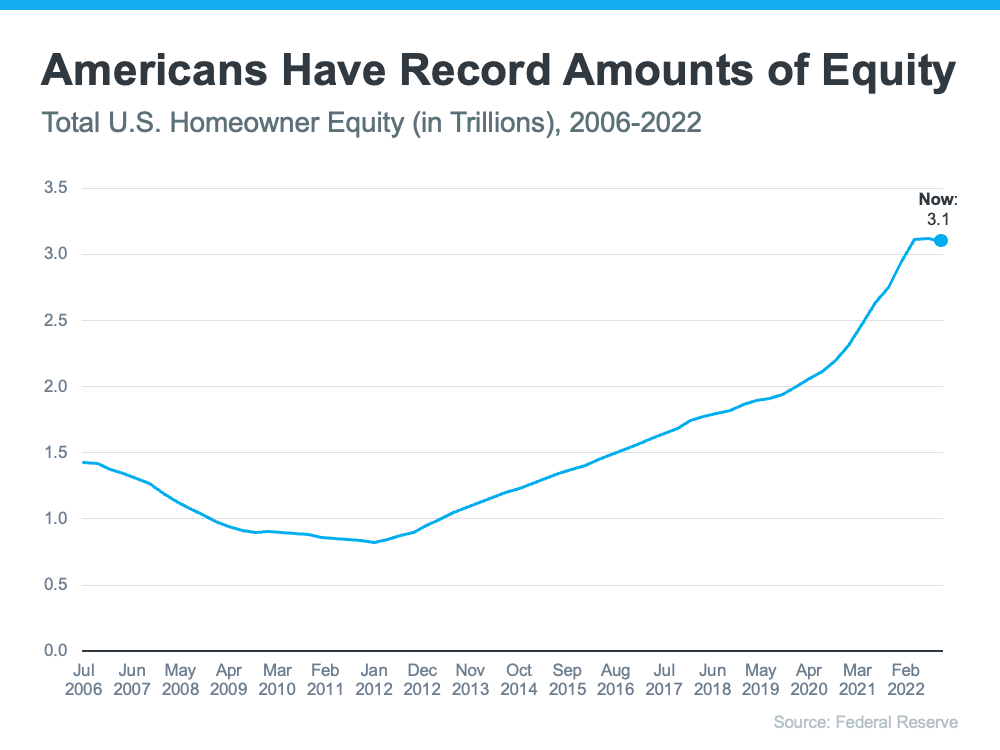
That low inventory of homes for sale helped keep upward pressure on home prices over the course of the pandemic. As a result, homeowners today have near-record amounts of equity (see graph below):

And, that equity puts them in a much stronger position compared to the Great Recession. Molly Boesel, Principal Economist at CoreLogic, explains

Most homeowners are well positioned to weather a shallow recession. More than a decade of home price increases has given homeowners record amounts of equity, which protects them from foreclosure should they fall behind on their mortgage payments.”

Bottom Line

The graphs above should ease any fears you may have that today’s housing market is headed for a crash. The most current data clearly shows that today’s market is nothing like it was last time.

Key Factors Affecting Home Affordability Today

Do You Know What They Are?

Key Factors Affecting Home Affordability Today | MyKCM

Every time there’s a news segment about the housing market, we hear about the affordability challenges buyers are facing today. Those headlines are focused on how much mortgage rates have climbed this year. And while it’s true rates have risen dramatically, it’s important to remember they aren’t the only factor in the affordability equation.

Here are three measures used to establish home affordability: home pricesmortgage rates, and wages. Let’s look closely at each one.

1. Mortgage Rates

This is the factor most people are focused on when they talk about homebuying conditions today. So far, current rates are almost four full percentage points higher than they were at the beginning of the year. As Len Kiefer, Deputy Chief Economist at Freddie Mac, explains:

“U.S. 30-year fixed mortgage rates have increased 3.83 percentage points since the end of last year. That’s the biggest year-to-date increase in rates in over 50 years.”

That increase in mortgage rates is impacting how much it costs to finance a home purchase, creating a challenge for many buyers that’s pricing some out of the market. While the current global uncertainty makes it difficult to project where mortgage rates will go in the future, experts do say that rates will likely remain high as long as inflation does.

2. Home Prices

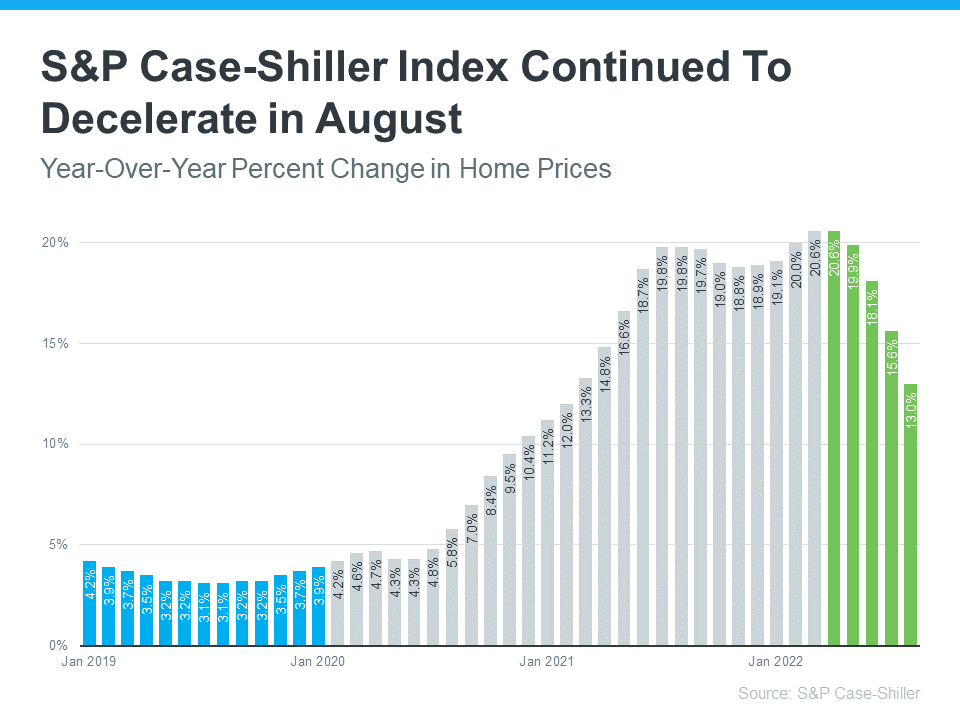
The second factor at play is home prices. Home prices have made headlines over the past few years because they skyrocketed during the pandemic. Now, the most recent Home Price Index from S&P Case-Shiller shows home values continued to decelerate for a fifth consecutive month (shown in green in the graph below):

Key Factors Affecting Home Affordability Today | MyKCM

This deceleration is happening because higher mortgage rates are moderating demand, and as a result, easing the buyer competition and bidding wars that previously drove prices up.

What’s worth noting though, is how much higher home prices still are than they were before the pandemic (shown in blue in the graph above). Even now, we have a long way to go to get to more normal levels of home price appreciation, which is historically closer to 4%. When both mortgage rates and home prices are high, affordability and your purchasing power become a greater challenge.

But while prices are still elevated in many markets, some areas are seeing slight declines. It all depends on your local market. For insight into what’s happening in your area, reach out to a trusted real estate professional.

3. Wages

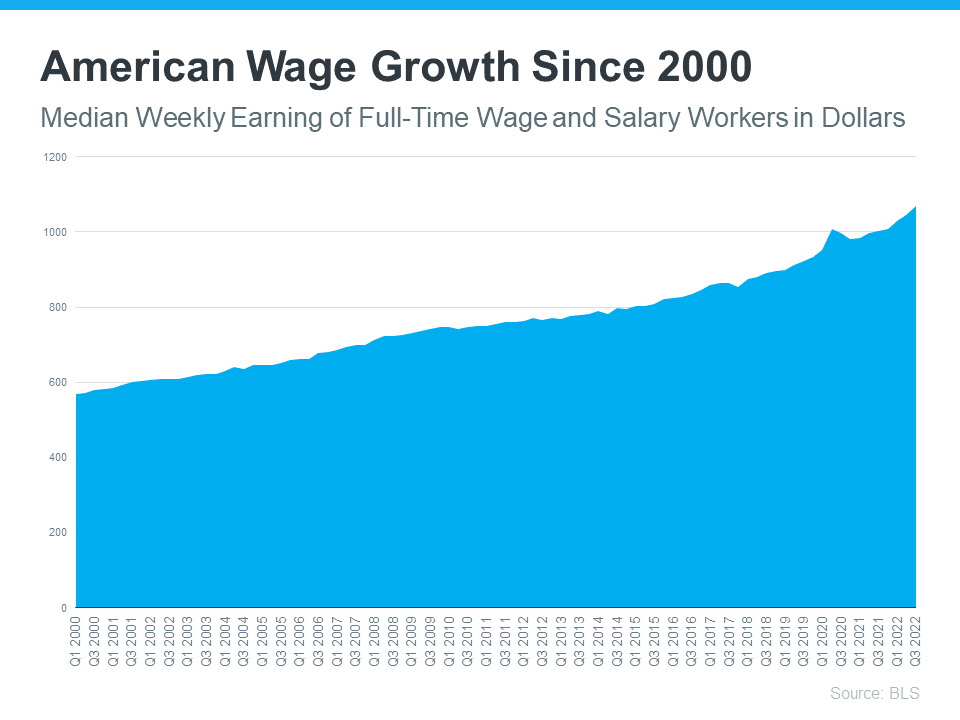
The one big, positive component in the affordability equation is the increase in American wages. The graph below uses data from the Bureau of Labor Statistics (BLS) to show how wages have grown over time. This year is no exception.

Key Factors Affecting Home Affordability Today | MyKCM

As the Bureau of Labor Statistics (BLS) reports:

Median weekly earnings of the nation’s 120.2 million full-time wage and salary workers were $1,070 in the third quarter of 2022 (not seasonally adjusted), the U.S. Bureau of Labor Statistics reported…This was 6.9 percent higher than a year earlier

So, when you think about affordability, remember the full picture includes more than just mortgage rates. Home prices and wages need to be factored in as well. Because wages have been rising, they’re a big reason why serious buyers are still purchasing homes this year.

If you have questions or want to learn more, reach out to a trusted advisor who can explain how all of these variables work together and what’s happening in your area. As Leslie Rouda Smith, President of the National Association of Realtors (NAR), says:

Buying or selling a home involves a series of requirements and variables, and it’s important to have someone in your corner from start to finish to make the process as smooth as possible… and objectivity to deliver trusted expertise to consumers in every U.S. ZIP code.”

Bottom Line

To learn more, let’s connect today and make sure you have a trusted lender so you’re able to make an informed decision if you’re planning to buy or sell a home right now.