
Why Now Is a Great Time to Buy a House in Southern New England

If you’ve been dreaming of owning a home in Southern New England—think Connecticut’s charming towns, Rhode Island’s coastal gems, or the historic corners of southern Massachusetts—2025 might be your moment. As of March 11, 2025, the real estate market here is showing signs of opportunity for buyers. From economic shifts to local trends, here’s why now could be the perfect time to plant your roots in this picturesque region.

1. Interest Rates Are Settling Down

After a wild ride in recent years, mortgage rates appear to be stabilizing across the U.S., and Southern New England is no exception. While we’re not back to the rock-bottom rates of the 2010s, the steep climbs of the early 2020s have eased. For buyers in places like New Haven or Providence, this means more predictable mortgage payments and a chance to lock in a rate before any surprises. With the Federal Reserve keeping a close eye on inflation, rates could hold steady—giving you a solid window to finance that Cape Cod-style home or colonial fixer-upper.

2. Inventory Is Ticking Up Across the Region

Southern New England has felt the inventory crunch hard, with sellers clinging to their low-rate mortgages or waiting out peak prices. But early 2025 is bringing a shift. In towns like Mystic, CT, or Bristol, RI, more “For Sale” signs are popping up. Maybe it’s empty nesters downsizing, retirees heading south, or homeowners feeling the market has topped out. Whatever the reason, this uptick means more choices—whether you’re eyeing a waterfront cottage in Narragansett or a suburban spread in West Hartford. More options also mean less cutthroat bidding wars, a welcome relief for buyers.

3. Prices Are Softening in Hotspots

The pandemic boom sent prices soaring in Southern New England, especially in desirable spots like Fairfield County or the South Shore of Massachusetts. But as demand normalizes, some of these overheated markets are cooling. Sellers who bought at the 2021 peak might be more open to negotiation, especially in areas where listings are lingering a bit longer. In places like Cranston, RI, or Milford, CT, you could snag a deal that feels more reasonable than it did two years ago. It’s not a buyer’s market everywhere, but the balance is tipping your way in many towns.

4. Southern New England’s Long-Term Appeal Holds Strong

This region’s charm—historic villages, top-notch schools, and proximity to both Boston and New York—makes it a perennial winner for real estate investment. Even with short-term ebbs and flows, home values here tend to climb over time. Buying now in, say, Portsmouth, RI, or Simsbury, CT, sets you up for equity growth as hybrid work trends keep the area attractive to professionals and families alike. A home purchased in 2025 could be your family’s cornerstone—and a financial win—by 2035.

5. Local Incentives Are Sweetening the Deal

From builders in growing suburbs like Plainfield, CT, to sellers in competitive markets like Attleboro, MA, incentives are emerging. New developments might offer rate buydowns or closing cost help, while individual sellers could throw in extras—like covering roof repairs or offering flexible move-in dates—to close the deal. These perks can shave thousands off your upfront costs, making homeownership more attainable in a region where prices can still feel steep.

6. Seasonal Timing Works in Your Favor

March in Southern New England is a quiet season for real estate. The spring rush hasn’t fully kicked in, and winter’s chill keeps some buyers indoors. That means less competition as you tour that farmhouse in Litchfield County or that bungalow in Westerly, RI. Sellers listing now might be extra motivated—perhaps they’re relocating for work or eager to sell before the summer crowd arrives. It’s a strategic moment to strike while the market’s still waking up.

A Word of Caution

Southern New England’s market varies widely—Greenwich, CT, is a different beast from Fall River, MA. Check local trends, get pre-approved, and team up with a realtor who knows the area inside out. Coastal properties might still carry flood insurance costs, and older homes could need TLC. But for those ready to navigate these quirks, the rewards are there.

The Bottom Line

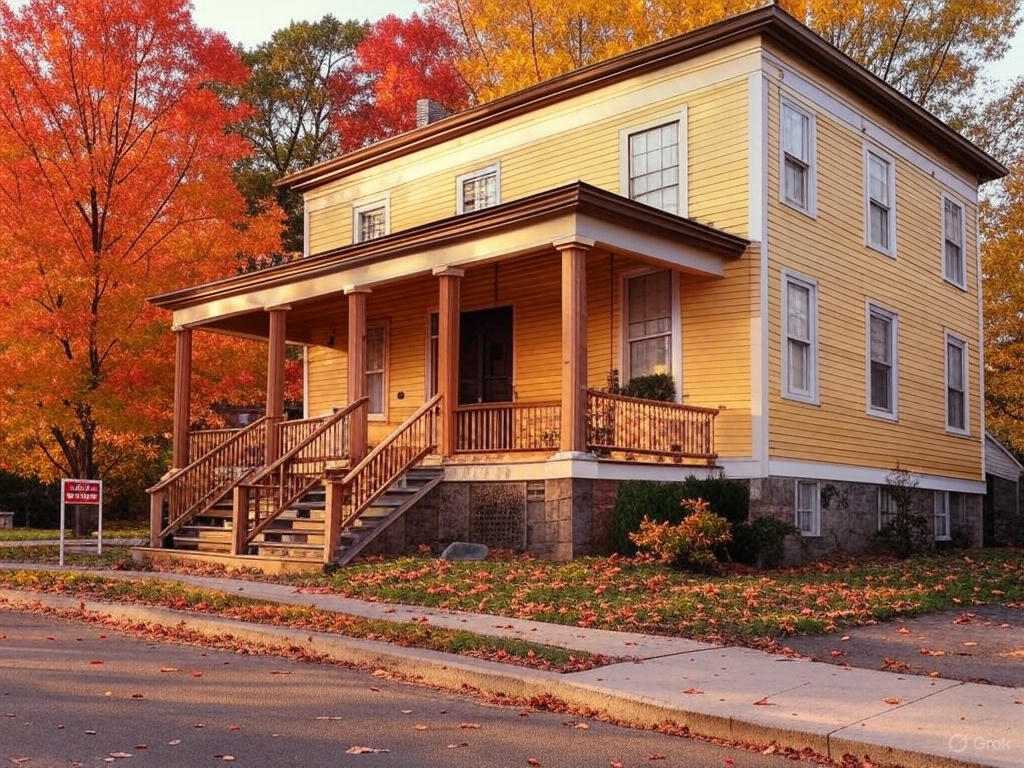
March 2025 is shaping up as a buyer’s sweet spot in Southern New England. With steadier rates, growing inventory, softening prices in key areas, and the region’s enduring appeal, the stars are aligning. So, grab your map, hit the open houses—from Stamford to Stonington—and make your move. That quintessential New England home, complete with a front porch and autumn leaves, might be waiting for you right now.

If you have any questions, or would like to connect, email me: Joe@JoeLucacaRealtor.com

Home Ownership – A Great Hedge Against The Impact Of Rising Inflation

If you’re following along with the news today, you’ve heard about rising inflation. Today, inflation is at a 40-year high. According to the National Association of Home Builders (NAHB):

“Consumer prices accelerated again in May as shelter, energy and food prices continued to surge at the fastest pace in decades. This marked the third straight month for inflation above an 8% rate and was the largest year-over-year gain since December 1981.”

With inflation rising, you’re likely feeling it impact your day-to-day life as prices go up for gas, groceries, and more. These climbing consumer costs can put a pinch on your wallet and make you re-evaluate any big purchases you have planned to ensure they’re still worthwhile.

If you’ve been thinking about purchasing a home this year, you’re probably wondering if you should continue down that path or if it makes more sense to wait. While the answer depends on your situation, here’s how homeownership can help you combat the rising costs that come with inflation.

Homeownership Helps You Stabilize One of Your Biggest Monthly Expenses

Investopedia explains that during a period of high inflation, prices rise across the board. That’s true for things like food, entertainment, and other goods and services, even housing. Both rental prices and home prices are on the rise. So, as a buyer, how can you protect yourself from increasing costs? The answer lies in homeownership.

Buying a home allows you to stabilize what’s typically your biggest monthly expense: your housing cost. When you have a fixed-rate mortgage on your home, you lock in your monthly payment for the duration of your loan, often 15 to 30 years. James Royal, Senior Wealth Management Reporter at Bankratesays:

A fixed-rate mortgage allows you to maintain the biggest portion of housing expenses at the same payment. Sure, property taxes will rise and other expenses may creep up, but your monthly housing payment remains the same. That’s certainly not the case if you’re renting.”

So even if other prices increase, your housing payment will be a reliable amount that can help keep your budget in check. If you rent, you don’t have that same benefit, and you won’t be protected from rising housing costs.

Investing in an Asset That Historically Outperforms Inflation

While it’s true rising home prices and higher mortgage rates mean that buying a house today costs more than it did even a few months ago, you still have an opportunity to set yourself up for a long-term win. That’s because, in inflationary times, you want to be invested in an asset that outperforms inflation and typically holds or grows in value.

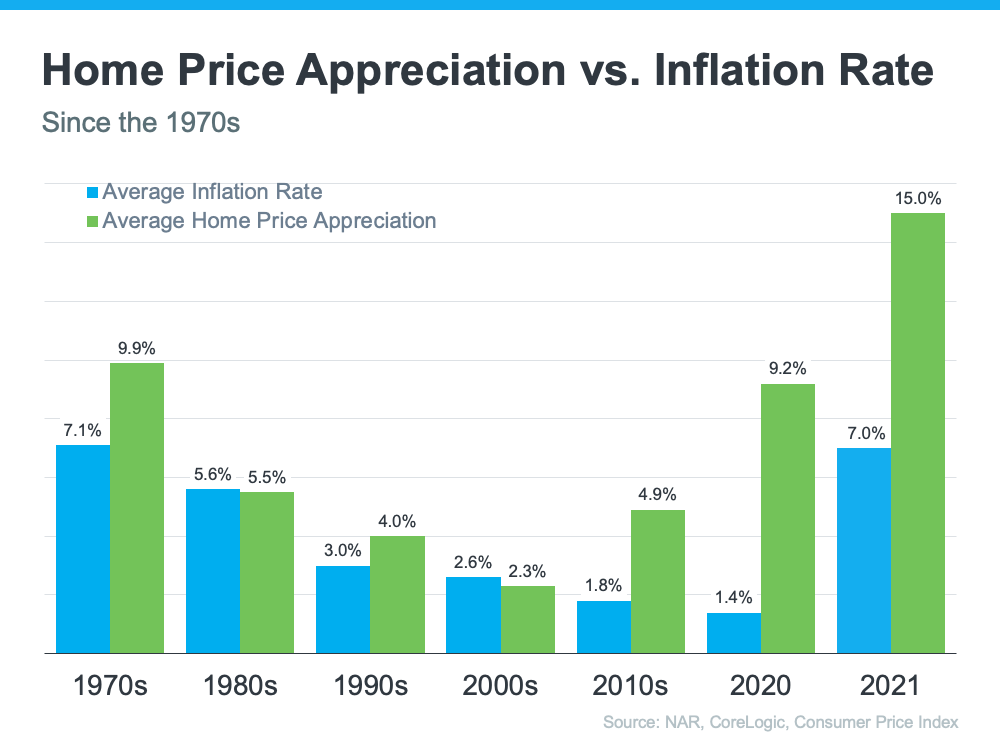
The graph below shows how the average home price appreciation outperformed the average inflation rate in most decades going all the way back to the seventies – making homeownership a historically strong hedge against inflation (see graph below):

Homeownership Is a Great Hedge Against the Impact of Rising Inflation | MyKCM

So, what does that mean for you? Today, experts forecast home prices will only go up from here thanks to the ongoing imbalance of supply and demand. Once you buy a house, any home price appreciation that does occur will grow your equity and your net worth. And since homes are typically assets that grow in value, you have peace of mind that history shows your investment is a strong one.

That means, if you’re ready and able, it makes sense to buy today before prices rise further.

Bottom Line

If you’ve been thinking about buying a home this year, it makes sense to act soon, even with inflation rising. That way you can stabilize your monthly housing cost and invest in an asset that historically outperforms inflation. If you’re ready to get started, let’s connect so you have expert advice on your specific situation when you’re ready to buy a home.

« Things To Avoid After Applying for a Home Loan

The information contained, and the opinions expressed, in this article are not intended to be construed as investment advice. Keeping Current Matters, Inc. does not guarantee or warrant the accuracy or completeness of the information or opinions contained herein. Nothing herein should be construed as investment advice. You should always conduct your own research and due diligence and obtain professional advice before making any investment decision. Keeping Current Matters, Inc. will not be liable for any loss or damage caused by your reliance on the information or opinions contained herein.Search

Categories

We believe every family should feel confident when buying and selling a home.

RELATIONSHIPS AND REAL ESTATE

A REALTOR’s® Relationships with Colleagues, Partners and Vendors Can Save a Transaction.

A REALTOR’s® job (in a nutshell) is to procure the sale of real estate between a willing buyer and seller.

We have all been part of, or witnessed, a transaction that does not go well.  Whether it is buying/leasing a car, or retaining the services of a contractor, unless the parties are successful in communicating extremely clearly, there is always a possibility for a “miscommunication”.  This can lead to wounded egos, unhappy parties, or an issue to be resolved by litigation.  Can a Relationship save a transaction?

My relationship with my network is essential to client-satisfaction.  Whether referring a client to another REALTOR® a thousand miles away, or a local lender, I have extreme confidence in my referral partners.  When you are looking for a REALTOR® to partner with, it is essential that he/she have strong relationships with their referral network.

As a Full-Time REALTOR® for over a decade, I am fortunate that I have not had anything worse than the “wounded ego” (mine) experience in my business.  Live-and-
Learn.  One of the ways I have virtually eliminated the chance of these types of “miscommunications” is by putting all important communications in writing.  Additionally, I am very selective when choosing business partners and vendors to whom I refer business.  My partners and vendors are full-time (so they aren’t distracted by another job,) professional (they conduct themselves and behave appropriately,) ethical (they don’t put anything in front of the client’s best interests,) and licensed, and insured.  Having established relationships with people of this caliber, reduces the chance a client will be unhappy with me, because of an experience they had with a referral partner.

My colleagues who are also at the top of their game usually have strong networks of referral partners that they rely on for their clients’ needs. 

There are lots of good REALTORS®, but what sets some apart is the strength of the relationships they have with their referral network.  There have been times when I have to request that a partner, or vendor, to go the “extra (ethical) mile” to help bring a transaction to the Closing Table.  Maybe it is as simple as asking my preferred moving company to squeeze in an extra moving job for a client who scheduled a move with another mover whose truck broke down, or calling North Smithfield Tree Service to remove tree limbs that the Seller couldn’t get removed and it’s the day before Closing. 

The difference between success and failure maybe the extra effort exerted as a result of a relationship between the REALTOR® and a someone in their network.   

That is why Relationships are essential in the business of Real Estate.  YES, a relationship CAN save a transaction.

Joe Luca is a full-time REALTOR® who helps buyers and sellers achieve their real estate goals.

Is NOW A Good Time To Invest In Real Estate?

Timing the market isn’t usually a fruitful endeavor…it’s certainly not rewarding. The decision to invest in rental property should be driven by objective data, not “timing”.

Some things you may want to consider:

  1. Are you personally prepared to be a landlord? “Landlording” isn’t always easy, and it isn’t usually fun. Unlike owning mutual funds, stocks and bonds, it is an active investment. You need to be engaged and committed to being a good Landlord. Unlike the aforementioned, you CAN buy an investment worth five times the amount of money you are committing to the investment by leveraging your investment with a mortgage.
  2. How much money do you have to invest? You need to have enough for a down payment and some reserves for repairs, maintenance, and vacancies.
  3. Will you live in the investment property? This can be a great way to get started if you buy a multi-family.
  4. Will you qualify for a mortgage? Mortgage products for investment properties have different guidelines than mortgages for single family properties.
  5. What are the rental rates in the neighborhoods where you would be looking to invest? Rental rates have been increasing much faster than the cost of ownership nationwide. For example: three rental units generating $3,600/month can support a lot of debt-service, taxes, insurance, and vacancy ratio of 5%. (A $375,000 mortgage with 20% down would have a PITI payment of under $3,000/month at 6.5%.)

While I can’t predict when the next “Crash” is going to occur, it doesn’t appear to be on the horizon based on the empirical data. If it is, and you buy a good property in a good neighborhood, in a desirable town, you will be shielded from the downturn much better than if you bought a property in a not-so-good neighborhood. You will be shielded even more if you are uber-selective with your tenants. Good tenants are almost worth their weight in gold if you compare them to the cost of bad tenants.

Knowledge is power so your best first step may be to have a conversation with an experienced, full-time REALTOR® to assess if investing in real estate is the right “move” for you.

The FED Raised Rates – Is It Still A Good Time To Buy/Sell A Home?

As was widely expected, The Federal Reserve raised interest rates, and indicated that they will continue to do so throughout the year.  This actually indicates that things are good in our economy… a positive sign that consumers are spending money, and prices are being pushed upward by the forces of supply and demand.  Interest rates are like a “brake system” on a train, when things start moving too fast apply the brakes, to slow the train down.  Likewise, when the economy starts to “move too fast”, prices are getting pushed higher (Inflation) so a slight increase in interest rates will temper, or slow down, these price increases.  Inflation, like our debt, diet, and data, needs to be managed so it  doesn’t become a problem.  Which was why The Fed repeatedly lowered interest rates during the depths of The Great Recession – to spur economic activity (buying stuff.)

1st Home Mortgage

What will this mean for me?  If you have a 30 year mortgage of $250,000, at a fixed interest rate of 5%, the monthly payment (not including taxes and insurances) would be about $1,342. A rate increase to 5.25% would raise your monthly payment by about $35.  Most consumers spend more than that on coffee every month.  Will that be detrimental for some consumers? Probably.  However, rising incomes, should mitigate that affect.  The US unemployment rate is 4.1%, and Full Employment is considered to be about 5%.  Many economists believe that this dynamic pushes wages higher so (theoretically) more people should be able to afford the extra $35/month.

resnick logo

If you are considering Selling your house, you should act sooner and not later. Inventory is tight, so there is not much competition at this time; but more people may list their homes for sale increasing the competition. You best option is to contact a Full Time, Experienced, REALTOR® to get the answers to your questions for your situation.  Feel free to call me, Joe Luca at 401-580-9797.  All questions are welcomed and answers are free and without obligation.

GentryMoving